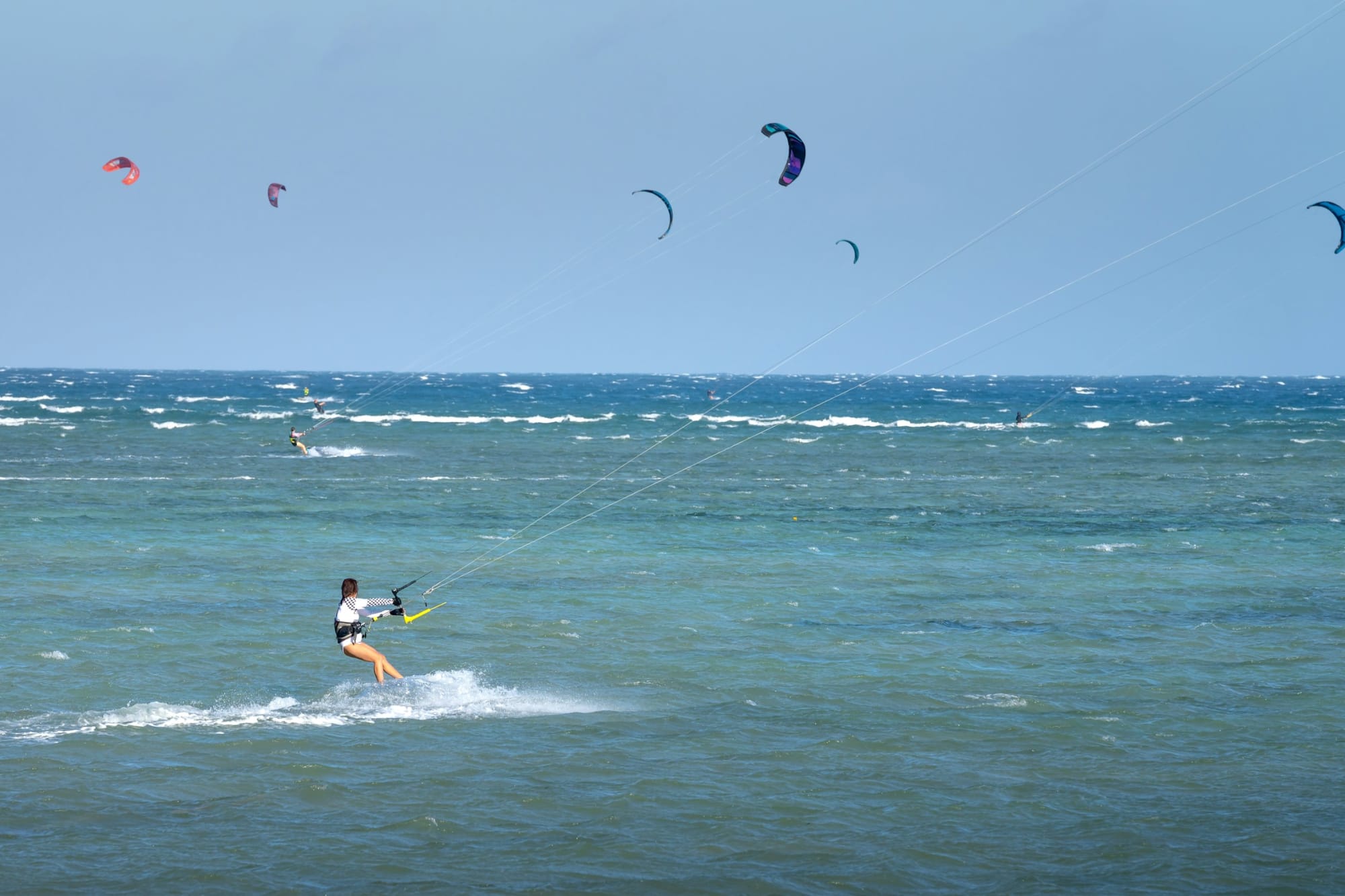
Ervaar de sensatie van kitesurfen en durf de lucht in te gaan! Ontdek tips en trucs voor een onvergetelijke avontuur op het water.
 Mosa Tomeij
Kitesurfen: durf jij de lucht in te gaan?
🌊 Ben je op zoek naar een nieuwe uitdaging die je hart sneller doet kloppen? Kitesurfen combineert de spanning van vliegeren met de vrijheid van surfen en is daarmee de ideale sport voor avontuurlijke twintigers en dertigers in Nederland. Maar hoe begin je aan deze opwindende sport? Laten we samen de vlieger opsteken en de basisprincipes van kitesurfen verkennen.
Wanneer en waar kun je kitesurfen?
🌬️ Kitesurfen is mogelijk wanneer de windkracht tussen de 12 en 25 knopen ligt, wat neerkomt op ongeveer 22 tot 46 kilometer per uur. In Nederland zijn de maanden van april tot oktober het meest geschikt, met de beste omstandigheden in de lente en de vroege zomer. Populaire spots zijn onder andere Scheveningen en Kijkduin, waar je kunt leren kitesurfen met ervaren instructeurs.
De mooiste kitesurf locaties in Nederland en Europa
🏖️ Nederland biedt diverse kitesurfspots, maar voor wie verder wil kijken, zijn er in Europa prachtige locaties te vinden. Denk aan Tarifa in Spanje, bekend om zijn constante wind, of de stranden van Bretagne in Frankrijk, waar je kunt genieten van zowel golven als vlak water. Deze plekken zijn ideaal voor zowel beginners als gevorderden.
Hoe leer je kitesurfen?
🎓 Het is essentieel om kitesurflessen te volgen bij een gecertificeerde school. Een 3-daagse cursus is vaak voldoende om de basis onder de knie te krijgen. Tijdens deze lessen leer je onder andere de theorie achter wind en veiligheid, kitecontrole op het land en waterstarttechnieken. De kosten voor deze cursussen variôren van ongeveer 200 tot 400 euro, afhankelijk van de school en de duur van de lessen.
Wat heb je nodig om te beginnen?
🛠️ Als beginner is het aan te raden om te starten met een kite van 9 tot 12 vierkante meter, afhankelijk van je gewicht en de windcondities. Een twin-tip board is veelzijdig en geschikt voor diverse omstandigheden. Daarnaast is een trapeze, wetsuit en veiligheidsuitrusting zoals een helm en impactvest noodzakelijk. De kosten voor uitrusting kunnen variôren van 800 tot 2000 euro, afhankelijk van de kwaliteit en merken van de gear die je kiest.
Fysieke voorbereiding en vaardigheden
🏋️ Hoewel kitesurfen niet extreem veel kracht vereist, is een gemiddeld fitnessniveau wel handig. Zwemvaardigheid is essentieel, aangezien je veel tijd in het water zult doorbrengen. Daarnaast is het belangrijk om de wind te kunnen lezen en de juiste technieken te beheersen om veilig en effectief te kunnen kitesurfen.
Veelgemaakte fouten en hoe ze te vermijden
⚠️ Een veelvoorkomende fout is het kiezen van de verkeerde kitegrootte. Begin met een grotere kite om in lichtere wind te kunnen kiten. Daarnaast is het belangrijk om niet te veel kracht te gebruiken; kitesurfen draait om techniek en timing. En vergeet niet: zelfs de beste kitesurfers zijn ooit begonnen met vallen en opstaan. Dus wees geduldig en geniet van het leerproces!
🌟 Kitesurfen is een sport die je niet alleen fysiek uitdaagt, maar ook mentaal stimuleert. Het gevoel van vrijheid en de adrenaline die je ervaart wanneer je over het water glijdt, is ongeôvenaard. Dus waar wacht je nog op? Trek je wetsuit aan, pak je kite en ga het avontuur tegemoet!
Over de auteur Mosa Tomeij
Mosa woont in het bruisende Utrecht. Ze is nieuwsgierig naar wat mensen drijft en heeft een scherp oog voor wat er onder de oppervlakte speelt. Met ervaring in de jeugdpsychiatrie werkt ze nu bij de Raad voor de Kinderbescherming. Ze staat bekend om haar enthousiasme en gevoel voor humor.
Nuttige websites
KiteFEEL
Kitesurfschool met locaties in Nederland, biedt lessen en informatie.
Jouw website hier
Bezoek website
Disclaimer
De informatie op deze pagina is bedoeld als algemene inspiratie. We delen links naar externe websites die interessant kunnen zijn, maar we kunnen niet garanderen dat de informatie altijd actueel, juist of veilig is.
Reacties (0)
Log in om te reageren